


What if your choice of free zone in 2026 determines more than just your office address, but whether you actually qualify for a 0% tax rate? Most entrepreneurs feel overwhelmed by the competing claims of over 45 different jurisdictions and the looming fear of hidden renewal fees. You’re likely concerned about how the 9% Corporate Tax impact affects your bottom line or how to maintain your status as a Qualifying Free Zone Person. It’s a complex landscape where a single administrative oversight can lead to unexpected audits and friction.
We believe business setup should be an exciting milestone rather than a legal hurdle. This guide provides an expert-led roadmap to help you master these complexities and achieve a seamless company formation. You’ll gain a clear, unbiased comparison framework and the confidence to navigate the latest 2026 regulations with ease. We’ll explore the updated qualifying activities under Ministerial Decision No. 229 and provide a transparent look at the total investment required for long-term growth. From mandatory e-invoicing to the latest visa rule changes, we’ve simplified every step so you can focus on building your legacy in the UAE.
Key Takeaways
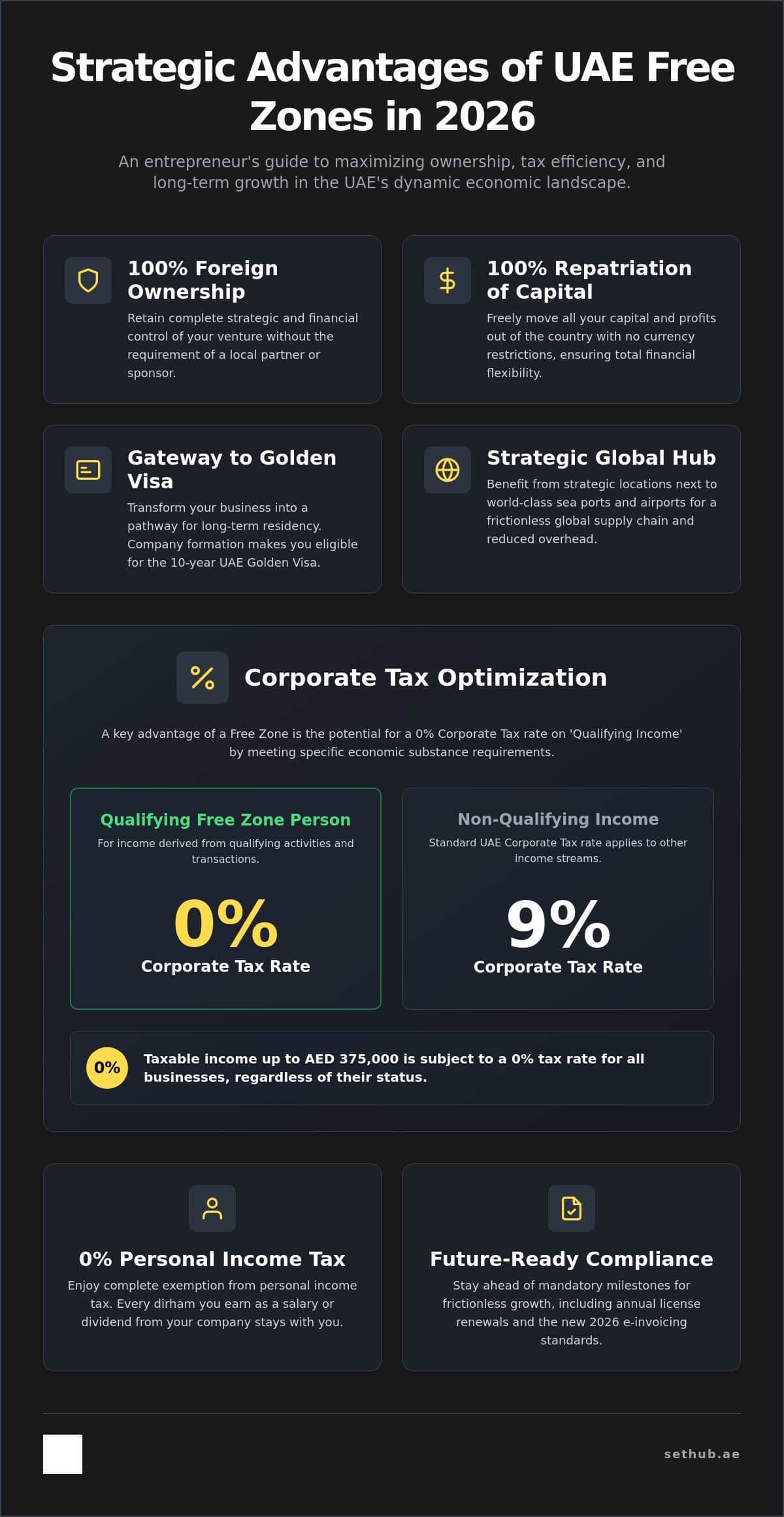
- Retain complete control of your venture through a legal structure that guarantees 100% foreign ownership without the need for a local partner.
- Optimize your financial strategy by aligning your operations with the 2026 tax requirements for a free zone Qualifying Person to maintain a 0% rate.
- Select the perfect jurisdiction with precision using an “activity-first” framework designed to match your license to specialized industrial hubs.
- Transform your entrepreneurial goals into long-term stability by connecting your company formation with eligibility for the UAE Golden Visa.
- Ensure frictionless growth by staying ahead of mandatory compliance milestones, including annual license renewals and the new 2026 e-invoicing standards.
Understanding the UAE Free Zone Concept in 2026
A UAE free zone is much more than a simple business district. It is a self-governed jurisdiction that operates under its own regulatory framework, distinct from the UAE mainland. These zones serve as specialized ecosystems where international entrepreneurs can launch and scale ventures with unparalleled ease. In 2026, the landscape has shifted from general trade hubs to highly specialized industrial clusters. Each is designed to support specific sectors like fintech, healthcare, or logistics.
The core pillar of this structure is 100% foreign ownership. You don’t need a local partner to hold shares in your company. This autonomy allows you to maintain total strategic and financial control over your business. You’ll also find that certain areas are classified as “Designated Zones” for VAT purposes. These specific zones are considered outside the UAE for VAT on goods. This can significantly optimize your supply chain costs if you’re involved in international transshipment.
The Evolution of Free Trade Zones
Free zones have undergone a massive transformation. They started as simple ports of entry but have become the engines behind the UAE’s ‘D33’ economic agenda. This ambitious plan aims to position the UAE as a top global financial hub by 2033. To support this, free zones now offer specialized infrastructure that goes beyond office space. You’ll find purpose-built labs for pharma, high-speed data centers for tech, and specialized studios for media.
One of the most enduring advantages is the 100% repatriation of capital and profits. There are no restrictions on moving your earnings out of the country. This financial freedom, combined with the lack of currency restrictions, makes the UAE one of the most attractive places for global investment.
Free Zone vs. Mainland: The Fundamental Choice
The decision between a free zone and a mainland setup usually comes down to where you want to do business. Free zone companies are excellent for international trade or providing services globally. If your goal is to sell goods directly into the local UAE market, you would typically need to work through a local distributor or consider a mainland license.
Regulatory oversight is another key difference. Mainland companies fall under the jurisdiction of the Ministry of Economy and the local Department of Economy and Tourism. Free zone entities, however, are governed by their specific Free Zone Authority. This often means a more streamlined, “one-stop-shop” experience for licensing and renewals. When reviewing the List of UAE Free Zones, you’ll see that each authority offers unique perks tailored to their industry focus. In 2026, the distinction is simple: free zone trade is essentially “offshore” for global markets, while mainland trade is “onshore” for direct access to the UAE’s domestic consumers.
Strategic Advantages: Why Global Entrepreneurs Choose Free Zones
Entrepreneurship in the UAE is no longer just about 100% ownership. It’s about strategic tax positioning. While the UAE has implemented a 9% corporate tax, a free zone entity can still enjoy a 0% rate on “qualifying income.” This depends on meeting specific criteria set by the Federal Tax Authority (FTA). For instance, taxable income up to AED 375,000 is subject to a 0% tax rate regardless of your status. Beyond that threshold, maintaining “adequate substance” is your ticket to long-term tax efficiency and financial optimization.
Location matters for rapid growth. Most jurisdictions are strategically placed next to world-class logistics hubs. Whether you need the maritime reach of a major international port or the air connectivity of a global air cargo hub, your supply chain remains frictionless. This proximity reduces transit times and operational overhead. You can calculate your setup costs to see how these logistical savings impact your initial investment and long-term ROI.
Tax Efficiency and Compliance
The FTA now plays a more active role in monitoring compliance across all jurisdictions. In 2026, “Substance Requirements” are the most critical factor for your business. You must demonstrate real economic activity within the UAE to qualify for tax incentives. This includes having physical premises and adequate full-time employees. Additionally, goods moved within these zones often benefit from customs duty exemptions. This keeps your trading costs low and your margins high.
Residency and Talent Acquisition
Hiring international teams is faster and simpler here. Free zones offer streamlined visa processing that avoids many of the administrative hurdles found in other jurisdictions. You’ll find simplified HR regulations that make it easy to scale your workforce as your business grows. High-skilled professionals and investors can secure their future through dedicated Golden Visa pathways. This makes the UAE a magnet for global expertise and a hub for specialized talent.
Navigating the 45+ Options: A Framework for Selection
Picking the right jurisdiction is the most consequential decision you’ll make for your business. With over 45 options available, the “Activity-First” rule is your primary filter. You must match your specific trade license to the zone’s core specialization. For example, commodities traders or those in the precious metals sector should gravitate toward specialized industrial hubs designed for heavy trade. This alignment ensures you’re surrounded by the right infrastructure and networking opportunities from day one. It’s about placing your business where it can breathe and grow without regulatory friction.
Reputation is a silent factor that dictates your speed to market. UAE banks evaluate the regulatory rigor of each jurisdiction during the corporate bank account opening process. Choosing a well-established free zone can significantly reduce the friction of your KYC (Know Your Customer) checks. A jurisdiction with a high reputation acts as a green flag for financial institutions, making your transition into the local economy much smoother and more predictable.
Top Jurisdictions by Industry Cluster
For e-commerce and general trading, Meydan Free Zone and Ajman NuVenture offer high flexibility and digital-first processes. Technology and AI ventures should look toward specialized clusters like Hub71 in ADGM, which provide advanced R&D infrastructure and access to venture capital networks. If you’re running a service-based business, zones like IFZA offer cost-effective virtual desk options that keep overheads low while maintaining a professional image. Each hub is designed to solve specific industry pain points and accelerate your path to market.
The Set Hub Choice Matrix
Startups typically prioritize low entry barriers and flexible licensing. We focus on finding jurisdictions where zero-visa trade licenses can start as low as AED 4,888. For multinational corporations (MNCs), the focus shifts to scalability, warehouse availability, and international connectivity. Our framework helps you weigh these factors to ensure your choice supports future expansion. You can find more details in our guide on Choosing the Right Free Zone for Your UAE Business. We treat your selection not as a hurdle, but as a strategic checkbox on your path to success.
The Step-by-Step Roadmap to Free Zone Company Registration
Starting your business doesn’t have to be a daunting task. We’ve distilled the process into a logical progression of milestones that transform a complex legal transition into a routine set of checkboxes. Your journey begins with activity selection. You must be precise here. Choosing the wrong activity can lead to licensing delays or restricted trade. Once your activities are locked in, you’ll reserve your trade name. This ensures your brand identity is legally protected and compliant with UAE naming conventions. It’s the first step in claiming your space in the market.
Securing initial approval is your next priority. This is the formal “green light” from the free zone authority that allows you to proceed with legal documentation. During this stage, you’ll choose your office setup. While flexi-desks are a cost-effective starting point, physical offices are increasingly vital for 2026 compliance. A physical lease provides the “adequate substance” required for certain tax benefits and corporate banking approvals. After your office is secured, the authority issues your trade license. This document is the legal birth certificate of your venture, allowing you to begin residency visa processing for yourself and your team.
The final phase involves post-license setup. This is where you finalize your VAT registration and open your corporate bank account. These steps are essential for operational readiness and regulatory standing. To ensure a frictionless start, you can consult with our formation experts to manage these administrative milestones on your behalf.
Documentation and Legal Requirements
The paperwork stage is often where entrepreneurs feel the most friction. You’ll typically need passport copies, a clear business plan, and sometimes a No Objection Certificate (NOC) from a current employer. Professional PRO services act as an accelerant here, handling the direct interactions with government departments to speed up approvals. The Memorandum of Association serves as the foundational legal contract that defines the company’s share capital, ownership structure, and operational boundaries within the jurisdiction. Having these documents prepared with expert precision prevents costly delays. Working with experienced business setup consultants in UAE can significantly reduce the risk of errors and ensure your documentation meets every regulatory requirement from the outset.
Opening a Corporate Bank Account
Opening a bank account remains the most significant hurdle for new business owners. Banks in the UAE have strict compliance and KYC requirements that can take weeks to navigate. However, 2026 has seen a shift toward digital-first solutions. Platforms like Wio Business offer a faster, more transparent alternative to traditional banking institutions. We facilitate this process by ensuring your free zone company meets all the specific compliance checks required for a successful application. This strategic support turns a potentially months-long wait into a managed, predictable outcome.
Beyond the License: Ensuring Long-Term Compliance and Growth
Your business journey doesn’t end when you receive your trade license. It’s where the real momentum begins. Maintaining your free zone company in good standing requires a proactive approach to annual renewals. Missing a renewal deadline can lead to hefty penalties or even the suspension of your corporate bank account. We treat these administrative milestones as simple checkboxes to ensure your operations remain frictionless. By staying compliant, you protect your investment and signal reliability to your partners and clients.
Tax compliance is now a year-round priority. Every company must register for Corporate Tax, even if you don’t expect to exceed the AED 375,000 profit threshold. Registration is a mandatory requirement under the 2026 regulations. If you’re aiming for the 0% rate on qualifying income, your documentation must be flawless. You’ll also need to manage your VAT registration and quarterly filings if your taxable turnover exceeds AED 375,000. Using a reliable VAT calculator for UAE tax compliance can help you avoid costly miscalculations and stay audit-ready under the latest 2026 penalty structures. These aren’t just hurdles; they’re the pillars of a mature, transparent business in a global economy.
Many founders use their UAE base as a springboard for regional dominance. Leveraging your free zone presence is an ideal way to begin your expansion into Saudi Arabia (KSA). The synergy between these two markets allows for a diversified growth strategy that captures the best of the GCC. We provide the strategic bridge you need to scale across borders without the typical administrative friction. It’s about moving from a single setup to a regional empire with confidence.
Ongoing Accounting and Tax Support
Transparency is the new currency of business success. For many jurisdictions, maintaining audited financial statements is now a strict requirement to retain your tax benefits. You must also manage ILOE insurance and HR compliance for your team to avoid labor-related fines. We provide a frictionless, end-to-end management flow that handles these complexities for you. This allows you to focus on your core product while we ensure your back-office remains compliant and efficient.
Scaling Your Business in the Emirates
Growth often requires more than just a digital presence. As your team expands, you’ll likely need to upgrade from a virtual license to a physical office space. This transition increases your visa quota and strengthens your “economic substance” in the eyes of tax authorities. We make this scaling process seamless, helping you secure larger office solutions and additional residency permits as your revenue grows. Ready to start? Use our Business Setup Cost Calculator to begin.
Transform Your Vision into UAE Business Momentum
The landscape of the UAE free zone has evolved into a sophisticated ecosystem where strategic alignment is the key to maximum ROI. You now have the framework to match your business activity to the ideal jurisdiction, secure your residency through the Golden Visa, and navigate the 2026 tax regulations with total clarity. Success isn’t just about obtaining a license. It’s about building a compliant, scalable foundation that supports your long-term ambitions across the Emirates and beyond.
Since 2009, we’ve assisted over 10,000 entrepreneurs in mastering this complex terrain. With deep expertise across all 45+ UAE jurisdictions and dedicated support for corporate banking and Golden Visa applications, we ensure your transition is routine and reliable. You don’t have to face the friction of regulatory hurdles alone when you have a seasoned navigator by your side. We turn every administrative milestone into a simple checkbox on your path to growth.
Start your frictionless business setup with Set Hub today
Your entrepreneurial journey in the UAE is ready for its next chapter. We’re here to make sure it’s a story of effortless growth and lasting success.
Frequently Asked Questions
Is a UAE free zone company 100% tax-free in 2026?
No, but the tax environment remains one of the most competitive in the world. While a 9% corporate tax applies to taxable income exceeding AED 375,000, many entities can still benefit from a 0% rate. To qualify for this incentive, your business must maintain “adequate substance” and generate qualifying income as a Qualifying free zone Person. Taxable income below the AED 375,000 threshold is automatically taxed at 0% for all businesses.
Can a free zone company trade in the UAE mainland?
Direct trade with the UAE mainland local market typically requires a local distributor or a commercial agent. Companies established in these jurisdictions are primarily designed for international trade or providing services globally. If you wish to sell goods directly to customers in the mainland without an intermediary, you may need to establish a mainland branch or a separate mainland company. This ensures you comply with the specific geographic regulations of your license.
What is the cheapest free zone license in the UAE for 2026?
The most budget-friendly option currently available is the zero-visa trade license from Ajman NuVenture Free Zone, starting at AED 4,888. If you require a setup within Dubai, Meydan Free Zone offers competitive packages starting around AED 12,500. These costs vary based on the number of residency visas you require and the type of office solution you select. Choosing a free zone with low entry costs is an excellent strategy for startups focusing on lean operations. For a detailed breakdown of all fees and a definitive comparison, see our complete cost comparison of the cheapest free zone licenses in the UAE for 2026.
Do I need a physical office to set up a free zone company?
While many jurisdictions offer virtual desks or “flexi-desk” options, physical premises are increasingly vital for regulatory compliance. In 2026, having a physical office lease is a key component of meeting “economic substance” requirements for tax purposes. Additionally, most traditional banks require a physical office address to approve a corporate bank account. A virtual desk is suitable for basic licensing, but a physical space supports long-term stability and easier banking approvals.
How long does it take to get a free zone trade license?
You can typically secure a trade license in as little as 2 to 5 working days depending on the jurisdiction. The process is highly streamlined, especially for service-based activities that don’t require external government approvals. However, you should account for additional time for residency visa processing and corporate bank account opening. While the license itself is fast, the entire operational setup usually takes between three to six weeks to complete fully.
Can I apply for a Golden Visa through my free zone company?
Yes, business ownership is a recognized pathway to securing the UAE Golden Visa. Investors who establish a company with a capital investment of at least AED 2 million or meet specific criteria can qualify for this 10-year residency. This visa offers unparalleled stability for founders and their families, removing the need for frequent renewals. It’s a strategic move for entrepreneurs looking to make the UAE their permanent base for global expansion.
What is the difference between a free zone and an offshore company?
The primary difference lies in residency rights and the ability to have a physical presence in the UAE. Free zone entities allow you to apply for residency visas, rent office space, and trade internationally. Offshore companies are strictly used for holding assets or international trade outside of the UAE and do not provide any residency benefits. If you intend to live in the Emirates or hire staff, a jurisdiction with visa eligibility is essential.
Can I open a corporate bank account with a virtual office license?
It is possible, though traditional banks have become significantly more restrictive regarding virtual office setups. Digital-first platforms like Wio Business are often more flexible and provide a faster onboarding experience for companies with virtual desks. If you prefer a traditional bank, you’ll likely face a more rigorous compliance check. We often recommend a physical office lease if your primary goal is to secure a bank account with a legacy financial institution.
Need help with this? Set Hub’s consultants can help with free zone company setup. Book a consultation to get started.